SDS Pharma

How SDS Authoring Supports Pharmaceutical Product Safety

Safety Data Sheets (SDSs) are often associated with industrial chemicals, manufacturing environments, or laboratory operations—but they play an equally critical role in the pharmaceutical sector. From active pharmaceutical ingredients (APIs) to excipients and intermediates, properly authored SDSs help protect workers, ensure regulatory compliance, and strengthen product stewardship throughout the drug-development lifecycle. In an industry where…

Read more
SDS Regulatory Differences

Navigating SDS Requirements Across Regions: U.S., EU, and UK

Safety Data Sheets (SDSs) play a critical role in chemical hazard communication. But if your organization manufactures, formulates, or distributes chemicals across multiple regions, you already know that SDS requirements are not the same everywhere. The U.S., EU, and UK each maintain their own regulatory frameworks—aligned in some ways, yet different enough to cause compliance…

Read more
only representative

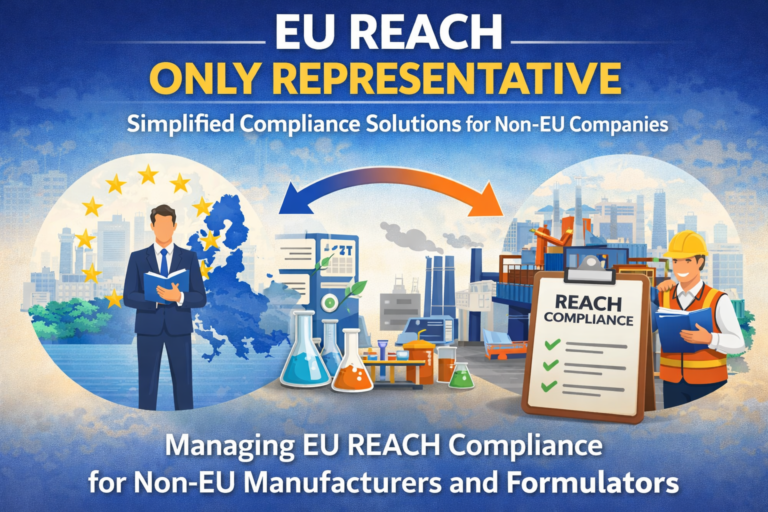
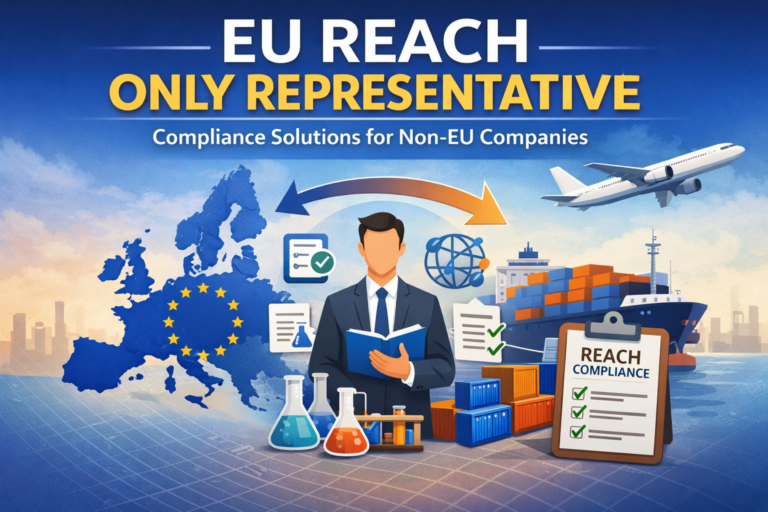
Understanding the Role of an Only Representative under EU REACH

    Understanding the Role of an Only Representative under EU REACH The European Union’s Registration, Evaluation, Authorisation and Restriction of Chemicals (REACH) regulation is one of the most comprehensive chemical regulatory frameworks in the world. Designed to protect human health and the environment, EU REACH places strict requirements on companies manufacturing or importing substances…

Read more

EPA Proposes Changes to Make PFAS Reporting Requirements More Practical and Implementable, Reducing Regulatory Burden

Today, U.S. Environmental Protection Agency (EPA) released a proposal to improve the scope of its perfluoroalkyl and polyfluoroalkyl substances (PFAS) reporting regulations under the Toxic Substances Control Act (TSCA) to make them more practical and implementable and reduce unnecessary, or potentially duplicative, reporting requirements for businesses while maintaining the ability to obtain important use and…

Read more
SDS

Top 10 Common Mistakes in SDS Authoring (and How to Avoid Them)

Accurate SDS Authoring: The Foundation of Chemical Safety A Safety Data Sheet (SDS) is more than a regulatory requirement — it’s a critical communication tool that protects workers, consumers, and the environment. Yet, many companies struggle to maintain fully compliant, up-to-date SDS documentation. At Experien Health Sciences, we’ve reviewed thousands of SDSs across industries and…

Read more
Toxicology Data

The Role of Toxicology Data in SDS Authoring

Why Toxicology Matters in Chemical Safety Documentation Behind every well-authored Safety Data Sheet (SDS) lies a foundation of accurate and scientifically sound toxicology data. This data provides the critical link between a chemical’s properties and the potential risks it poses to human health and the environment. At Experien Health Sciences, toxicology isn’t just a checkbox…

Read more
GHS Chemical Safety

How GHS Transformed Global Chemical Safety Communication

A New Era in Chemical Safety The Globally Harmonized System of Classification and Labeling of Chemicals (GHS) revolutionized the way the world communicates about chemical hazards. Before GHS, safety data and hazard communication varied dramatically between countries—creating confusion, inefficiency, and safety risks. Today, GHS has become the universal framework that underpins chemical safety documentation, labeling,…

Read more
SDS

SDS vs. MSDS: What’s the Difference and Why It Matters

Understanding the Evolution of Safety Documentation If you’ve worked with chemicals, pharmaceuticals, or industrial materials, you’ve likely come across both MSDS and SDS. These acronyms represent two generations of safety documentation that help communicate crucial information about chemical products. But what’s the difference between an MSDS (Material Safety Data Sheet) and an SDS (Safety Data…

Read more

EPA Finalizes TSCA Risk Evaluation for 1,1-Dichloroethane

Today, the U.S. Environmental Protection Agency (EPA) released its final risk evaluation for 1,1-dichloroethane conducted under the Toxic Substances Control Act (TSCA). EPA determined that 1,1-dichloroethane presents an unreasonable risk of injury to human health driven by three conditions of use (COUs). EPA did not identify exposures to the general population, or to the environment,…

Read more

EPA Proposes Temporary Relief to Ensure Lab Compliance with Methylene Chloride Regulations under TSCA

EPA Proposes Temporary Relief to Ensure Lab Compliance with Methylene Chloride Regulations under TSCA The U.S. Environmental Protection Agency (EPA) is proposing to extend various upcoming compliance dates in the final risk management rule for methylene chloride under the Toxic Substances Control Act (TSCA) in order to ensure long-term compliance with the rule’s requirements. The…

Read more

EPA Finalizes TSCA Risk Evaluation for Formaldehyde

Today, the U.S. Environmental Protection Agency (EPA) released the final risk evaluation for formaldehyde conducted under the Toxic Substances Control Act (TSCA). EPA has determined that formaldehyde presents an unreasonable risk of injury to human health, specifically to workers and consumers, under its conditions of use (COUs). Formaldehyde is found nearly everywhere. People and animals…

Read more

Brazil’s chemical inventory and chemicals management legislation is headed for President Lula’s signature

Brazil’s chemical inventory and chemicals management legislation is headed for President Lula’s signature. Once signed into law, Brazil will be among other developed countries that closely regulate which chemical substances can be manufactured or imported in Brazil and which companies are authorized to do so. While referred to by some as “Brazil REACH”, there are…

Read more

EPA Issues Test Order for PFAS Used in Manufacturing Under National Testing Strategy

WASHINGTON – Today, Oct. 9, the U.S. Environmental Protection Agency issued the fifth Toxic Substances Control Act (TSCA) Test Order requiring testing on per- and polyfluoroalkyl substances (PFAS) under EPA’s National PFAS Testing Strategy, the latest action taken under EPA’s PFAS Strategic Roadmap to confront contamination from “forever chemicals” nationwide. This action orders Innovative Chemical Technologies, The Chemours Company,…

Read more

Department of Labor announces final rule updating the Hazard Communication Standard to better protect workers, first responders

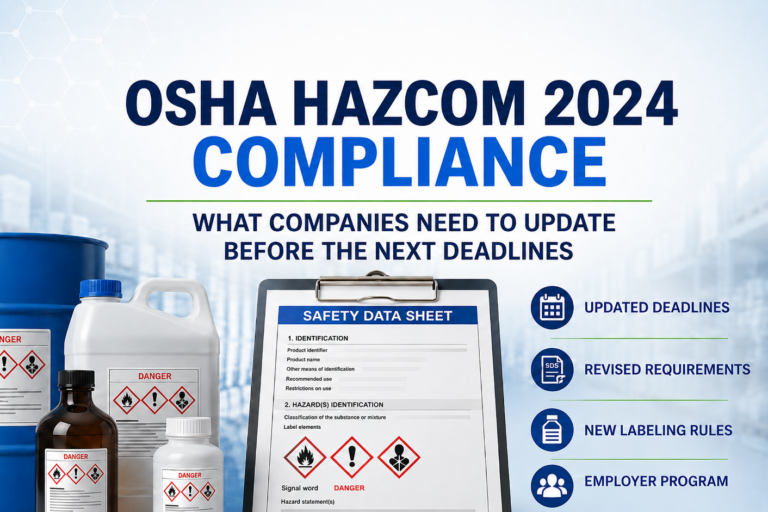
Improves quality of information on labels, safety data sheets; takes effect July 19, 2024 WASHINGTON – The Department of Labor today announced a final rule from its Occupational Safety and Health Administration that will update the current Hazard Communication Standard to better protect workers by improving the amount and quality of information on labels and…

Read more

EPA Issues 2023 Annual Report for Pesticide Registration Improvement Act

Today, the U.S. Environmental Protection Agency (EPA) issued the Fiscal Year (FY) 2023 Pesticide Registration Improvement Act (PRIA) Annual Report, the first one published since PRIA 5 was authorized in 2022. This report describes EPA’s implementation of PRIA 5 including: tracking and status for EPA’s review of pesticide registration actions, registration review cases, process improvements…

Read more

NEW on the Consumer Product Safety section of Canada.ca

The Cosmetic Ingredient Hotlist has been updated and is now available. An overview of these changes can be found on the Changes to the Cosmetic Ingredient Hotlist webpage. Certain updates to entries included in the proposed changes are currently undergoing additional consultation, as indicated in a previous email to Cosmetics Mailing List subscribers. Future updates…

Read more

EPA Requests Comment on Modernizing Pesticide Label System to Improve Safety and Accessibility

The U.S. Environmental Protection agency is requesting feedback on its plan to adopt digital pesticide labels that will make labeling information clearer, more consistent, and more accessible to users. The Agency is specifically requesting feedback on the proposed organization of digital labels and the proposed phases of developing these labels. EPA’s plan for digital labels…

Read more
Chemical Registrations & Notifications

EPA Begins Process to Prioritize Five Chemicals for Risk Evaluation Under Toxic Substances Control Act

The U.S. Environmental Protection Agency (EPA) announced that it is beginning the process to prioritize five additional toxic chemicals for risk evaluation under the nation’s premier chemical safety law. If, during the 12-month long statutory process, EPA designates these five chemicals as High Priority Substances, EPA will then begin risk evaluations for these chemicals. EPA…

Read more
Chemical Registrations & Notifications

EPA Proposes Stronger Rules to Protect People from Persistent, Bioaccumulative, and Toxic Chemical Exposures

The U.S. Environmental Protection Agency (EPA) released a proposed rule to further protect people from exposure to two chemicals that are toxic, remain in the environment for long periods of time, and accumulate in the body. Both decabromodiphenyl ether (decaBDE) and phenol, isopropylated phosphate (3:1) (PIP (3:1)) are persistent, bioaccumulative and toxic (PBT) chemicals that…

Read more
Chemical Registrations & Notifications

EPA Releases Meeting Minutes and Final Report from Science Advisory Committee on Chemicals 1,4-Dioxane Review

EPA released the meeting minutes and final report from the September 12-14, 2023, Science Advisory Committee on Chemicals (SACC) virtual public meeting regarding the Draft Supplement to the Risk Evaluation for 1,4-Dioxane. 1,4-Dioxane was one of the first 10 chemicals to undergo risk evaluations under the amended Toxic Substances Control Act (TSCA). The risk evaluation…

Read more