
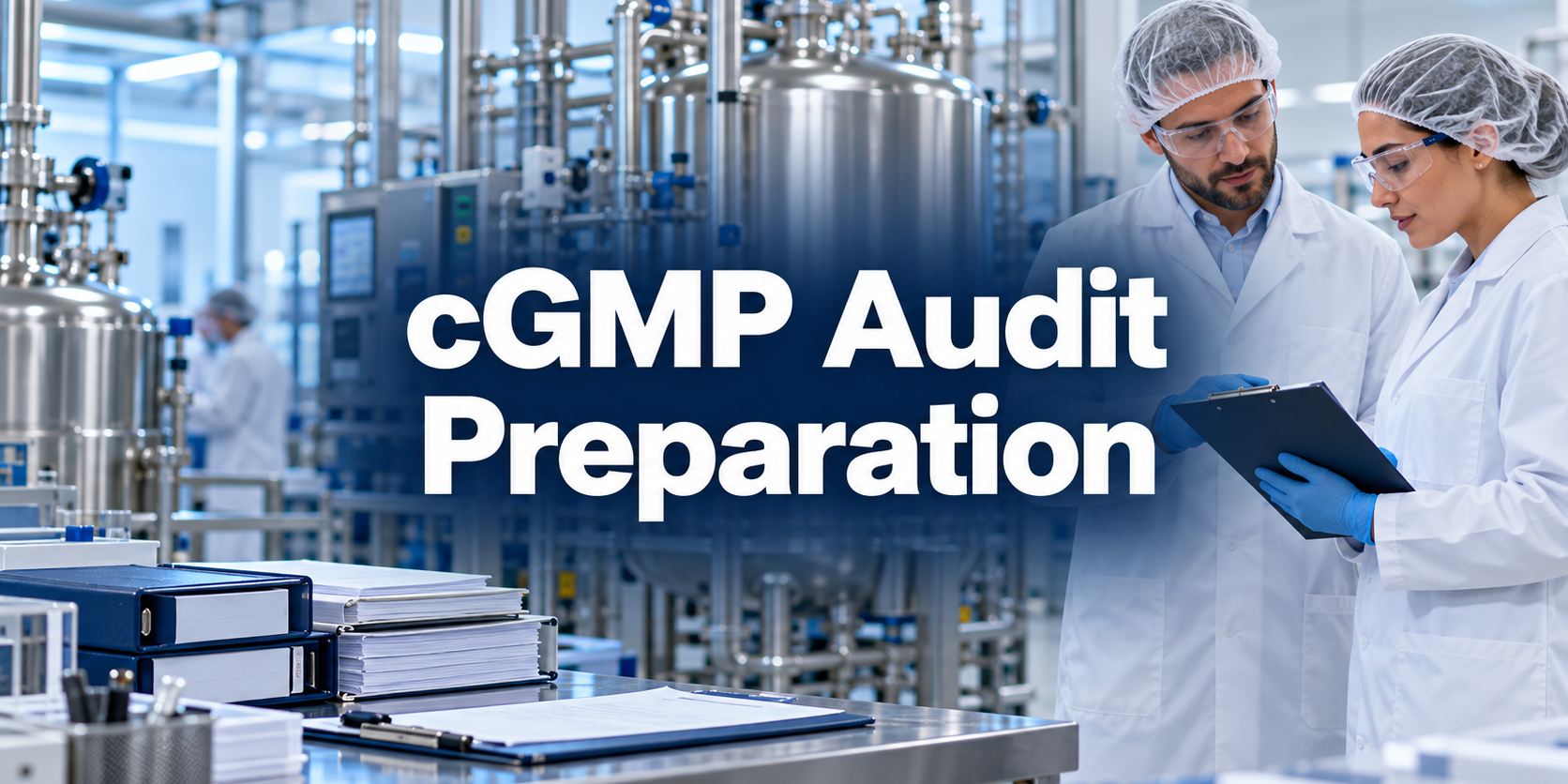
Preparing for a current Good Manufacturing Practice (cGMP) audit starts well before an auditor arrives. It requires a clear understanding of how your operation controls quality, how employees carry out their responsibilities, and whether records accurately reflect the work performed.
A well-planned audit gives manufacturers and supply-chain partners an opportunity to examine those connections, identify weaknesses, and establish priorities for improvement.
Whether you operate a manufacturing facility or rely on a contract manufacturer, thoughtful preparation helps make the audit a useful tool for strengthening your quality program.
Define the Audit’s Scope First
Before gathering documents, establish what the audit will evaluate.
The appropriate criteria depend on the product category, activities performed, applicable regulations, and any relevant customer or contractual standards. Drug manufacturing requirements should not automatically be applied to every other product category. FDA maintains distinct regulatory resources for pharmaceutical manufacturing and for food and dietary supplement operations.
Start by answering these questions:
- Which facilities, processes, and products are included?
- Is the audit evaluating your own operation or a supplier?
- Which requirements and standards will serve as the audit criteria?
- Have significant changes occurred since the previous review?
- Are there unresolved findings that need follow-up?
Agreeing on the scope helps the team gather relevant evidence and involve the right personnel.
Organize Records That Demonstrate How Work Is Controlled
Written procedures describe what should happen. Records help demonstrate what actually happened.
Depending on the audit scope, prepare relevant procedures and supporting records for activities such as employee training, equipment maintenance, material receipt, production, testing, storage, and complaint handling.
FDA’s cosmetic GMP inspection checklist, for example, addresses buildings and facilities, equipment, personnel, raw materials, production, laboratory controls, records, and labeling. The applicable audit checklist should reflect the operation being assessed.
As a preparation exercise, select a recent batch or shipment and follow its documentation through the operation. Can your team readily explain which materials were used, what checks were performed, and how the product’s disposition was determined?
This exercise can reveal missing connections before the audit begins.
Compare Written Procedures with Daily Practice
Reviewing documents is only part of preparation. Walk through the operation with the people who perform the work.
Ask employees to explain their tasks and show the instructions or records they use. Look for differences between the written process and current practice.
Useful questions include:
- Are approved instructions available where employees need them?
- Do procedures reflect the equipment and methods currently in use?
- Are responsibilities clear when something goes wrong?
- Can employees explain how they document and escalate a problem?
Where differences appear, investigate the reason. A procedure may need revision, a training gap may exist, or the workflow may make consistent execution difficult.
The goal is to understand the system well enough to improve it.
Include Suppliers and Contract Manufacturers
For companies that outsource production, audit planning should address how quality expectations are communicated and evaluated across organizational boundaries.
Consider reviewing how your company approves suppliers, communicates specifications, receives notice of changes, and resolves quality concerns. Identify who is responsible for decisions when a material or product does not meet expectations.
Experien Health Sciences conducts audits of cosmetic and personal care product manufacturers, including on behalf of brands that use contract manufacturers. Its services also include managing supplier, distributor, and re-packer audit programs.
Prepare Employees for an Open, Evidence-Based Review
Employees should understand the audit’s purpose and how their work relates to product quality.
Encourage clear, factual answers supported by the relevant records. If someone does not know an answer, they should know where to find the information or which colleague can help.
Assign a coordinator to manage document requests and ensure appropriate personnel are available. A simple request log can help the team track what has been requested, provided, or remains outstanding.
Good preparation makes it easier for the auditor and the organization to evaluate the same evidence.
Turn Findings into Meaningful Corrective Action
Plan for follow-through before the audit starts.
For each finding, a practical response should:
- Describe the issue clearly. Identify the evidence and the requirement or expectation involved.
- Evaluate its significance. Consider potential effects on product quality and other affected activities.
- Investigate the cause. Determine why the issue occurred.
- Assign action and ownership. Establish responsibilities and realistic completion dates.
- Check effectiveness. Define how you will determine whether the action resolved the problem.
For example, if a required review was missed, completing that review addresses the immediate gap. Understanding why it was missed helps determine whether responsibilities, workload, training, or the process itself also need attention.
How Experien Health Sciences Can Help
Experien Health Sciences helps companies understand their cGMP obligations and establish practices and procedures suited to their operations.
Its services include audits of pharmaceutical excipient manufacturers, cosmetic and personal care product manufacturers, and food manufacturing or processing operations, including suppliers, distributors, and re-packers. Experien also provides input on new or upgraded facilities intended for cGMP operations.
Prepare for Your Next cGMP Audit with Confidence
Whether you are establishing a quality program, evaluating a manufacturing partner, or preparing for an upcoming audit, a structured approach can help you identify gaps and prioritize improvements.
Visit our Current Good Manufacturing Practice (cGMP) Audits services page to learn more and request a consultation about your audit needs.