
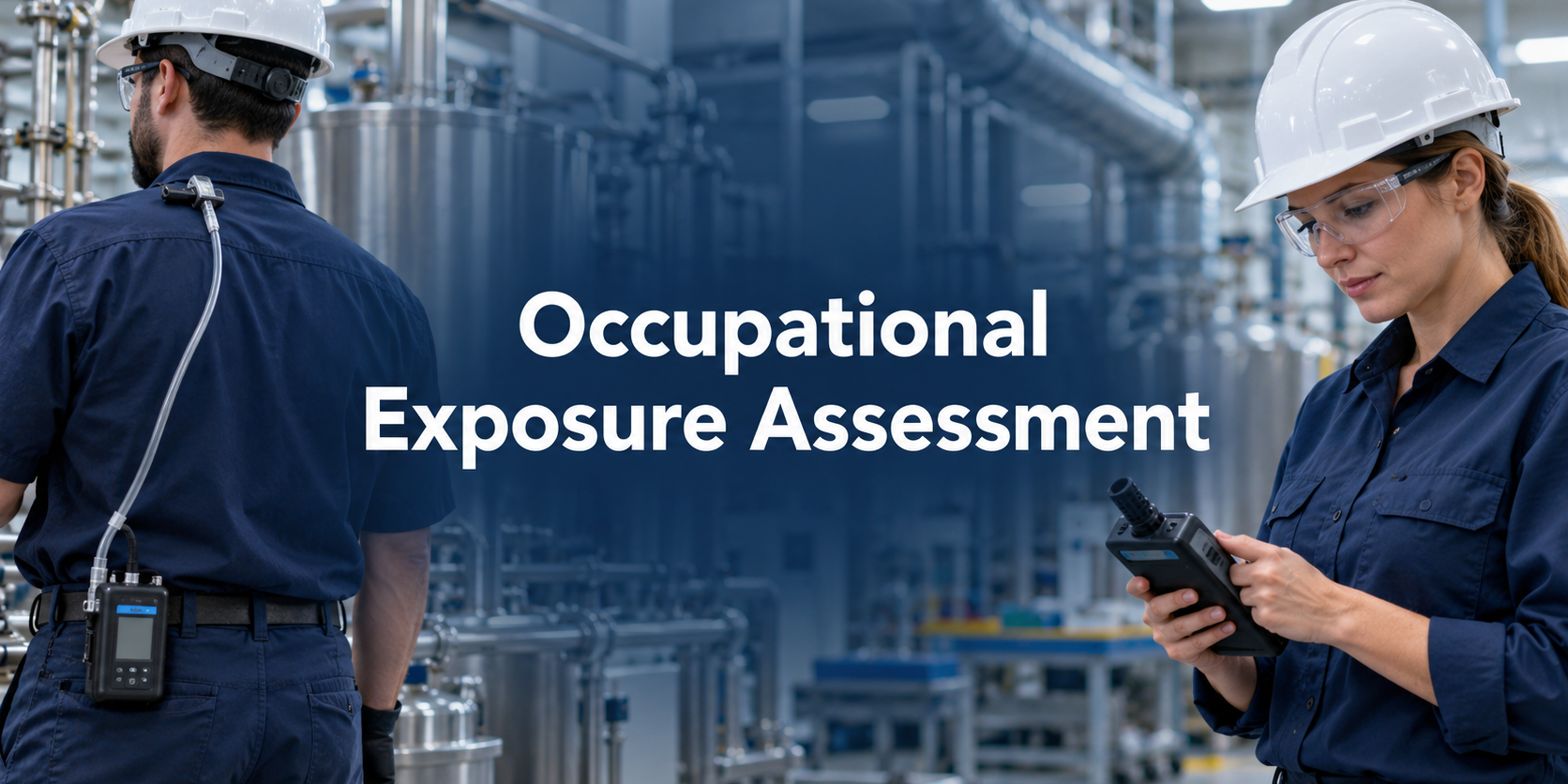
A new chemical, a production increase, or a change in cleaning procedures can introduce important questions about worker exposure. Even when a facility has an established safety program, previous assessments may not fully reflect how work is performed today.
Occupational exposure assessment helps employers understand where exposures occur, which workers may be affected, and whether protective measures are effective. NIOSH identifies exposure assessment as a key part of recognizing, evaluating, and controlling workplace hazards—and confirming that workers are protected.
For manufacturers, laboratories, and chemical processors, a practical question is: Does our current exposure information still represent our current operations?
When Should You Revisit an Exposure Assessment?
Consider reviewing your assessment when workplace conditions change, including:
- New materials or formulations: Introducing a chemical or changing ingredient concentrations.
- Process changes: Adjusting temperatures, mixing methods, application techniques, or material handling.
- Increased production: Using larger quantities or performing tasks more frequently.
- Equipment or ventilation changes: Installing, modifying, or relocating equipment.
- Different work practices: Changing cleaning, maintenance, or waste-handling procedures.
- New concerns: Receiving employee reports or identifying gaps in previous monitoring.
These situations provide useful starting points for a discussion with an industrial hygienist. The review should establish what changed, who could be affected, and what information is needed to evaluate the exposure.
Start with the Tasks Workers Actually Perform
Job titles alone do not describe exposure. Two employees in the same department may perform very different tasks, while employees in different departments may encounter similar materials.
A useful assessment considers routine production alongside less frequent activities such as opening equipment, collecting samples, transferring materials, and cleaning process vessels.
For example, a closed mixing process may operate differently during charging or maintenance. Reviewing those activities separately helps identify which conditions should be represented in a sampling plan. OSHA’s technical guidance emphasizes understanding operations and potential exposure sources when planning air monitoring.
Look Beyond Airborne Exposure
Inhalation is an important consideration, but it is not the only way chemicals can affect workers.
Skin contact can cause local effects, such as irritation or allergic reactions. Some chemicals can also pass through the skin and contribute to effects elsewhere in the body. An assessment focused entirely on air concentrations may therefore leave important questions unanswered.
Depending on the materials and tasks involved, the evaluation may need to consider splashes, contaminated surfaces, direct handling, and the suitability of protective clothing.
Choose Measurements That Answer the Right Questions
Before collecting samples, define what the results need to establish. Are you evaluating a worker’s exposure over a shift, investigating a brief task, or identifying an emission source?
Personal breathing-zone sampling and fixed-location area sampling serve different purposes. Sampling duration also matters: a shift-long average and a short-duration measurement answer different exposure questions.
Methods must be appropriate for the substance, expected concentration, and purpose of the assessment. OSHA provides guidance on personal sampling strategy, while the NIOSH Manual of Analytical Methods provides sampling and analytical methods for workplace exposure monitoring.
A clearly defined objective helps make monitoring results useful for the decision at hand.
Turn Findings into Protective Actions
An assessment should support decisions about how to reduce exposure.
The hierarchy of controls provides a preferred order for evaluating options:
- Elimination: Remove the hazardous substance or activity.
- Substitution: Replace it with a safer alternative after evaluating the replacement’s hazards.
- Engineering controls: Isolate workers from hazards through measures such as enclosure or ventilation.
- Administrative controls: Improve procedures, access restrictions, and work practices.
- Personal protective equipment: Select appropriate protection for the remaining exposure.
NIOSH places elimination, substitution, and engineering controls above administrative controls and PPE because they depend less on repeated human action to remain effective.
Make the Report a Working Resource
When planning an assessment, ask for documentation that clearly connects findings to next steps. Useful questions include:
- Which tasks and worker groups were evaluated?
- What conditions were present during the assessment?
- Where does uncertainty remain?
- Which actions deserve priority?
- What changes should trigger another review?
This approach makes the report useful to operations managers, safety teams, and employees responsible for implementing improvements.
How Experien Health Sciences Can Help
Experien Health Sciences provides qualitative exposure assessments and control banding support for chemical and pharmaceutical manufacturers.
Assessments are completed by a Certified Industrial Hygienist using the client’s methodology or Experien’s established approach. Written reports identify significant health hazards, explain their importance, and provide recommendations for monitoring and employee protection.
Understand Your Exposures. Prioritize Your Next Steps.
Whether your facility is introducing a new process or reviewing existing operations, an exposure assessment can help clarify where further evaluation and protective measures are needed.
Learn more about Experien Health Sciences’ Qualitative Exposure Assessment services and request a consultation to discuss your workplace exposure assessment needs.